Interview with Berlin-based performer Oryx on butoh and the body

For this interview I spoke with Oryx, a Berlin-based dancer and performance artist who practices and teaches butoh. Oryx talks here about their work, the history of butoh and its relevance today.

Jessica: How would you describe your work and yourself as a dancer?
Oryx: My work intersects between contemporary dance, butoh, and acting, and I’m heavily influenced by durational performance and immersive theatre and often use these techniques in my performances. I think the one thing that unifies all of my practices is an interest in uncanny, strange or unsettling environments and emotional landscapes. This involves a lot of playing with certain extremities like exhaustion, contortions, lack of control, and gesticulation, and I use these as mechanisms to excavate images or compositions or characters from the body, and to compose from mechanisms that speak through the body instead of imposing a narrative from the mind onto the body. I feel like I get to explore a lot of affective states and emotional landscapes.
How did you begin dancing, how did you decide that you wanted to pursue dance?
I never thought that I would be a dancer. I actually started with martial arts - my father was an instructor of Muay Thai, and I did that for many years alongside yoga. Then I moved to circus and I did aerial acrobatics, physical theatre and contortion. During the pandemic I couldn’t use my aerial, and I needed a practice that I could do anywhere because I couldn’t rely on something I could not always use. I started to explore more flow and floor acrobatics, and then I found contemporary dance through that. But in the process, in the years before, I met a physical theatre teacher, like a mime teacher who also did butoh, and then I started to learn more. My teachers encouraged me to pursue dance, so I started to take it more seriously. I was also already working and getting performance jobs, so it made sense to keep expanding my skills further.
So, I went to school for street and club styles and contemporary, to try and ingest as many languages in my body as possible so I would have a broad vocabulary to approach taking on characters and different states, and have a wide palate of tools to choose from. Now I’ve started to be more specific about how I train and what I focus on. I always approached dance from a storytelling perspective, and see dance as one of many tools to approach unveiling different characters, states, and narratives.
Butoh originated in post-war Japan. Can you tell me a bit about the practice, its origins, how it became popular in the West?
So Butoh emerged in the 1950s and 60s in post-war Japan from a collaboration of Tatsumi Hijikata and Kazuo Ohno, but they each also developed quite distinctive practices and methodologies. Butoh is known to be hard to define, as there are many different ways to approach it. It can be understood as a certain state of being, and many different teachers have different ways of approaching how to enter that state. Many also take specific parts of the original practice and expand them.
However some common features can be playful and grotesque imagery, taboo topics, and the extreme or absurd.
Hijikata used at some points a technique which one could call reduction, he investigated the very limited body with limited range of motion, and was interested in exhaustion and fragility. For example, he explored the aged body, the body that can’t stand up. One of my teachers took this as a starting point for a very reduced vocabulary: exploring certain types of body as well as the idea that if you don’t feel moved by something outside yourself, you don’t move.
For me the important thing is that you don’t move yourself, you’re moved by an object, an image, an emotion, another person.
In most butoh training I have encountered, there are two phases. One is to empty the body, which would consist of a few hours of practice to prepare the body for butoh. It could be anything from yoga to a more traditional butoh exercise which involves a lot of walking or practicing using different levels of energy. Some use more voice or more breathwork. This phase could be two or three hours in a workshop. Then the next phase is transformation, where you use images, which could be like a literal image from which you take notes and build a choreography, or could be the butoh-fu, a kind of surreal, logically contradictory poetry from Hijikata. Or you can use other things - other people focus on the relationship with the space, ‘ma’, or the relationship with a certain object. You use this to create or explore a usually improvised dance.
One could say there are three generations. But probably the most accurate way to trace its history is through specific teachers and concepts within the practice itself.

How did butoh evolve across the generations?
So, I think Hijikata’s method was always dark, one name for butoh is ankoku butoh, ‘the dance of darkness’. Kazuo Ohno I would say evolved to be less shocking or grotesque, and was more improvisational and malleable. Some say he focused more on building one’s individual voice within butoh. Yoshito Ohno, the son of Kazuo Ohno, also helped found a school of New Butoh with Sayoko Onishi, which explores multiple methodologies to approaching butoh. They define New Butoh as moving away from the traditional butoh and its focus on grotesque and scandal, and focuses more on the surrounding environment, nature, the relationship with oneself.
Every butoh teacher is different, and they say there are as many butoh’s as butoh choreographers. Every teacher has their own way for training and finding out what methods work, but there are some legacies and techniques derived from different masters.

When you teach butoh, what process do you teach?
I teach many different kinds of lessons, when I teach usually it’s the basic method, I focus a lot on the breath, and a lot on repetition, which is very helpful - just walking, just going into the floor, repeating an action over and over, as a way to get into this kind of rhythm.
But I also use hybrid, mutant forms… I teach workshops which are more interested in my research interests, for example butoh and post-human sensuality and sexuality. Or for instance, what I call ‘Living Sculpture’, where I use clay (and in my own practice, also latex), to build prosthetics or attachments, and explore how butoh can extend the perception of the body beyond its physicality. In this way I research the relationship between the body, its perception, and its environment, for example.
Can you say something about this state that you are trying to get to?
I’d say it’s a very focused state, a kind of meditative state. The process is that of emptying yourself, so you’re trained to move away from very mundane sorts of emotions or states… and you make yourself available to the space, to the audience, to the other people who you want to interact with, or to the image that you are putting in your body, and that becomes the thing that moves you. So, the state is more about being available and surrendering, and preparing your body to be able to surrender and not be distracted by other things.
How is vulnerability part of that?
I would argue there’s something related to the way you are vulnerable and surrendering yourself to something beyond your control, but I think it’s specifically in my practice and interest to be vulnerable, I like extracting or exploring certain emotional states. Or going to images that create very specific emotional landscapes. I like to work with this emotional, affective space intentionally, but not everyone’s practice is like that.
Is there a connection between butoh and sexuality?
I think so. For me, butoh is like a state of being or a state of approaching life. But in this case it’s more about an extended view of sexuality or sensuality rather than human sexuality in the way of thinking about sexual contact or sexual relations. It’s an extended view of sexuality, like being sexual and sensual in everything you do, feeling the sensual body as something beyond the physical landscape, the physical territory of the body, and just a way of relating to space. I like to imagine I am other beings, to think of my body like it’s something not human, like maybe my body it has multiple mouths or more eyes or other kinds of sensory inputs, then I can use butoh to experience different types of bodies and affective states, and ways of relating to space, and understand what could be sexual in another body.

By post-humanism, do you mean a change in the body?
Yes, I would say adapting, changing, enhancing or limiting. But it’s also a way of viewing the human - arguably the way we are living is already post-human, the way we enhance and augment the experience of the body past biology, such as through technology, through the phone, through how we eat, how we relate, how we work, how we communicate… we are already beyond the natural human so to say. And for me post-humanism is a lot about consciously affecting your experience of your body, by enhancing or limiting it.
Earlier you mentioned the uncanny as an important part of your practice. Could you tell me more about that?
I think it’s something I felt naturally drawn to. I’m interested in things that are strange, otherworldly or magical. I like being able to access a world that is strange and unfamiliar, but at the same time… I like this thing of having this afab… this female-assigned body and performing naked or in prosthetics or in a strange affective state. I like seeing that kind of body doing something creepy or strange.
I’m particularly interested in the ways that people relate to their bodies through performance. Could you say something about the relationship to the body in butoh?
I like that butoh considers the body as a kind of living object. So, in my practice I have the idea of the living sculpture, which comes with the idea that we are excavating a lot of space or symbols from our body in the butoh state. As a practice, butoh gave me this third-person perspective or this way of exploring the different internal landscapes of my body and I appreciate that ability of my body. I have a very strong visual imagination, like very concrete dreams, concrete images and butoh brings forth images from my body. But I also like to use performance to experience different states of being in my body, for example, performing durationally, or performing in specific spaces, to test my limits.
How does butoh remain relevant today?
I guess it depends on many geographical, social, and political factors. I think butoh is gaining popularity in many Western European cities, so I suppose it has a social relevance here. I would say as a practice itself, being in one’s body, practicing slowness, awareness, or body sensitivity, is something the body is chronically deprived of in many societies. A place to exercise the imagination and deep archives of the body is also at once a physical and arguably spiritual practice, and many outlets for spirituality are also not anymore available to many people. I think being able to exercise the imagination through the body is also something adults don’t often practice, but still need or enjoy. So, in this sense, yes, it can be relevant socially. I think choosing to be in one’s body, choosing to listen to its needs, desires, and imaginations and how we are affected by the space we place or find ourselves in, is also inherently political. Sensitising the body. I also think the combination of butoh with post-human methods of thinking or of exploring the body is particularly relevant in many contemporary cultures and artistic fields. But whether or not butoh has artistic relevance is up to personal taste … I do think however, many types of body-based art, especially if they are visceral or provoke emotion, can be powerful practices both for performers and viewers.
Is there anything else you’d like to add?
The way that I teach butoh and approach my practice in general is very interdisciplinary and exploratory, but I think that butoh can be so many things, and it continues evolving. Probably the longer and longer I do this, the more my practice and approach will change. The best way to understand butoh is to try it and try with as many different mentors as you can until you figure out what works for you.
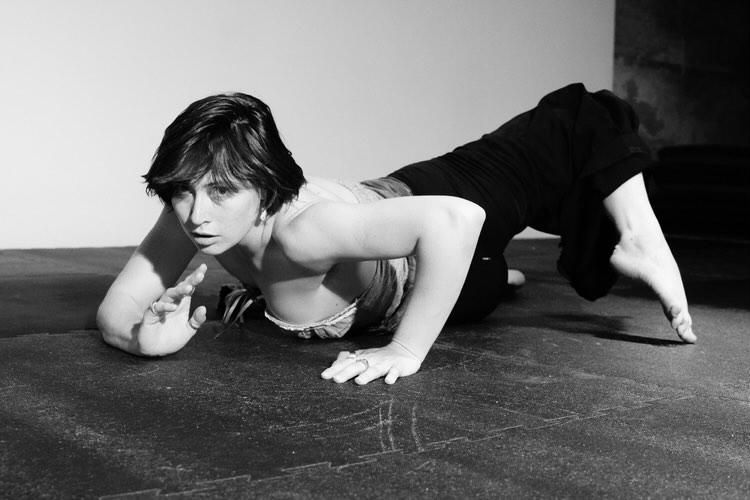
Oryx is a Berlin-based performer working between dance, butoh, and acting. They regularly teach butoh, contemporary dance, or interdisciplinary research workshops at 90mil in Berlin.
More on Instagram: https://www.instagram.com/oryxvlrn/


Comments